Every 15 seconds, a worker dies from a work-related accident or disease somewhere in the world, according to the International Labour Organization (ILO). Another 153 suffer a work-related injury. Behind these stark figures lies a common thread — human error, unpredictable environments, and the limits of traditional safety supervision.
Now, a silent revolution is changing that equation. From AI-driven cameras that detect unsafe behavior in real time to IoT sensors predicting machinery failures before they happen, technology is reprogramming how the world protects its workforce.
The global safety agenda is shifting — from responding to incidents to predicting them. And at its core lies a fundamental truth: technology isn’t just supporting safety; it’s redefining it.
From Indicators to Safety Insights: Why the Technology Shift Matters
The recent years have seen some critical, serious injuries and fatalities across the heavy industries located globally. In the latest reports by OSHA, a total of 5,283 fatal work injuries took place in the U.S. alone. This takes the fatality rate to 3.5 deaths per 100,000 full-time equivalent workers.
As per the estimates of the Bureau of Labor Statistics, 2.6 million workers from the private sector underwent non-fatal workplace injuries and illnesses when compared to the above fatality rate. This led to 37% cases undergoing days away from work (DAFW) and 28% having days of job transfer or restriction (DJTR).
These numbers illustrate the persistent gap between compliance and real-time risk prevention. While not all workplace incidents transform into serious injuries or fatalities (SIFs), the chances under traditional monitoring remain high. This demands a modern-day technology-based intervention led by Artificial Intelligence (AI).
Despite safety audits, incident reporting, and on-site training programs, traditional EHS systems still rely heavily on lagging indicators — analyzing incidents after they occur. By the time insights are drawn, the damage is already done.
What industries now need are leading indicators powered by AI, IoT, vision-based safety monitoring, and video analytics — systems capable of predicting unsafe acts, detecting behavioral anomalies, and preventing near misses before they evolve into SIFs. This shift marks the beginning of a data-driven era of workplace safety — where proactive technology replaces reactive supervision.
Technology as the Safety Multiplier
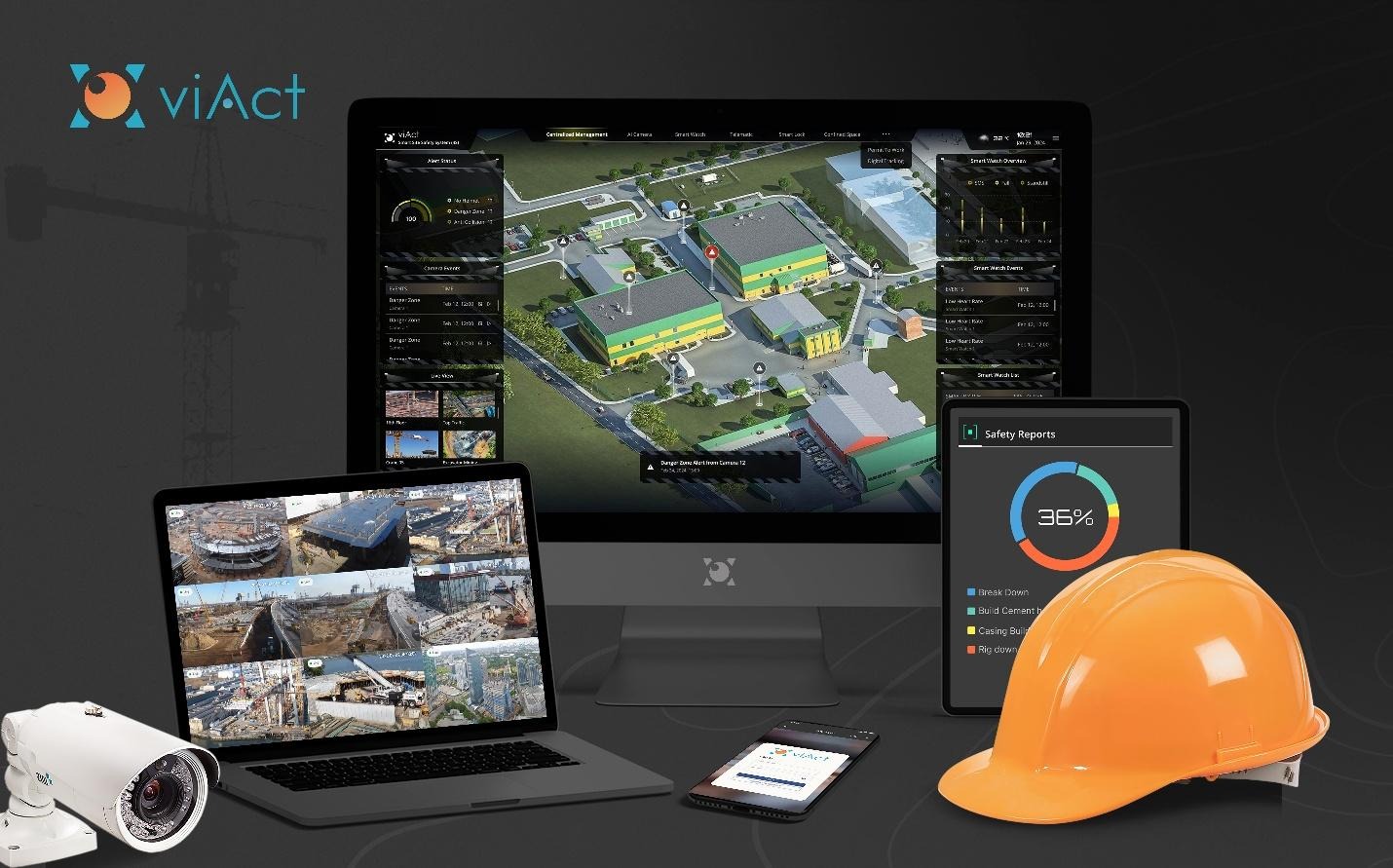
Deep insights into the safety of operations are now delivered through layers of connected technologies. For example, computer-vision technology integrated into the existing CCTVs in an industrial site monitors whether workers have fall-arrest harnesses secured, whether scaffolding is correctly installed, and whether prohibited entry zones are breached in real time.
EHS leaders deploy smart video analytics to monitor human-machine interactions, identifying unsafe proximity between operators and robotics. In the busy logistics sector, IoT sensors on forklifts, conveyance systems, and pedestrian zones provide instantaneous alerts when predefined safe zones are violated.
The use of advanced sensor arrays monitors heavy equipment telemetry—vibrations, temperature shifts, tilt angles—and feeds AI models to detect equipment trending toward failure or human-equipment interface hazards.
“Technology is not a replacement for human judgment – it’s an amplification. When computer vision and EHS analytics detect patterns invisible to the eye, safety teams move further ahead from responding to accidents to actively predicting them,” says Gary Ng, CEO of viAct.
Predictive Intelligence Leads Workplace Safety Data To Foresight
The next big frontier led by technology in workplace safety lies in the predictive and prescriptive capabilities of AI. Predictive safety models in industrial settings analyze patterns from historical incidents, weather conditions, machine performance, and worker behavior to forecast potential hazards before they occur.
For example, in offshore drilling rigs in oil & gas refineries, machine learning (ML) models can correlate temperature and pressure fluctuations to predict leak risks in pipelines. Similarly, in the case of construction safety, algorithms are trained on historical data to predict the likelihood of specific incidents like scaffolding failures under specific load and wind conditions.
Prescriptive safety takes this a step further — offering real-time recommendations and holistic corrective action management. For instance, when video analytics identifies an operator working near a live electrical zone without PPE, the system can automatically trigger a site-wide alert, halt the equipment, and notify supervisors.
The dynamic dashboards display trends based on predictive data integration in the form of site-wise safety scores, heatmaps of risky areas, contractor safety compliance scores, or worker ergonomic well-being assessments.
Human-Centric Safety Technologies: Empowering, Not Policing
While technology plays a commanding role, it must protect the workforce without intruding. This is where the importance of human-centric safety systems is emerging — designed to balance monitoring with privacy, empowerment, and trust.
Today, in smart manufacturing plants, IoT-based wearables, including smart watches and sensor-embedded PPE like helmets and vests, can detect fatigue, heat stress, and posture strain — alerting workers before physical exhaustion sets in. Similarly, in underground mining, this advanced set of tools based on AI, displays real-time navigation cues and hazard overlays, reducing spatial disorientation and collision risk in times of low visibility.
The workplace safety technologies ensure the deployment of privacy-preserving AI, which ensures that worker identities remain anonymous even as the system tracks unsafe behaviors. For instance, blurred-face analytics or body-outline tracking allows the EHS teams and supervisors to identify safety violations without recording identifiable personal data.
While high-risk sectors often express concern about potential accuracy trade-offs, studies have shown that privacy-by-design safety systems maintain exceptional precision — with deviations as low as just 0.68%, proving that protecting privacy doesn’t mean compromising on detection accuracy.
Translating Data into Safety Strategy
The real power of the intelligent safety systems lies in their ability to convert raw feeds into actionable strategies. Suppose in mining operations, the haul trucks operating too close to personnel zones can be immediately flagged, or equipment fatigue trends are recognised for predictive maintenance.
A Dubai-based manufacturing giant with more than 8000 employees shifted to AI-based safety management when relocating to a new facility with the intention of strengthening its safety culture. The use of technological safety tools resulted in a 54% reduction in safety violations, 88% fewer PPE violations, and 65% safer operations involving forklifts.
In fact, global leaders like Shell and Ford have already implemented versions of these solutions to guide EHS leadership.
Metrics evolve accordingly. For instance, instead of solely relying on TRIR (Total Recordable Incident Rate) or LTIFR (Lost Time Injury Frequency Rate) after an incident, safety teams can now monitor detailed KPIs like “AI-detected hazard alerts per 1,000 hours worked”, “median time from anomaly detection to intervention”, or “near-miss ratio improvement”.
The Economics of Safety Technology
Historically, workplace safety was viewed as a compliance cost. But as digital transformation is taking place, it has proven otherwise. Safety innovations in industrial sites not only prevent serious injuries and fatalities but also drive measurable ROI.
For instance, when a mining firm integrates computer vision technology across its haulage operations, there are reduced equipment collisions, saving millions in repair and downtime costs. Similarly, a construction contractor implementing digital permit-to-work (PTW) systems in place of engaging in heaps of paperwork can cut administrative hours, freeing supervisors for real-time risk interventions.
The business case for technology-driven safety is therefore clear: a safer workplace is a more productive and profitable one. AI transforms safety from a reactive necessity into a predictive investment that safeguards not only people but also enhances performance.
This transformation also shifts workforce morale. When employees trust that their safety systems are designed to protect — not monitor — their wellbeing, engagement rises, absenteeism drops, and safety becomes a shared responsibility rather than an enforced rule.
Global Adoption of Safety Technology and Policy Transformation
As workplace risks evolve, regulatory bodies and global brands are redefining how technology fits into compliance frameworks.
For instance, the International Labour Organisation and the European Agency for Safety and Health at Work (EU-OSHA) have both begun exploring frameworks for ethical AI deployment in occupational safety. Meanwhile, countries like Singapore, Hong Kong, and Saudi Arabia are leading digital EHS transformation with national-level AI inspection programs that combine drones, computer vision, and digital reporting platforms.
Corporations, too, are taking leadership roles. Rio Tinto and Anglo American have invested heavily in AI-assisted monitoring for autonomous mining fleets, ensuring continuous oversight without exposing workers to high-risk zones. Amazon has adopted vision AI for ergonomic safety in its warehouses, improving Musculoskeletal Disorder (MSD) recordable incident rate by 32%.
The convergence of technology, regulation, and enterprise responsibility marks a global turning point. Safety innovation is no longer confined to the EHS department — it’s becoming a strategic priority at the boardroom level, shaping brand trust, ESG reporting, and long-term business resilience.
Building a Connected, Intelligent Safety Culture
Workplace safety has entered a new chapter—one defined by intelligence, connectivity, and foresight, which leads by protecting the privacy and dignity of the workers. Technology has given EHS professionals the tools to foresee hazards rather than chase them. Across high-risk industries, from construction to manufacturing, mining to oil & gas, the message is clear: safety doesn’t wait for reports—it reacts before the moment of failure.
In a world where one incident can ripple across operations, reputations, and lives, the global agenda for technology in workplace safety is not optional—it is essential. The future won’t be shaped by compliance alone; it will be defined by anticipation, precision, and protection.