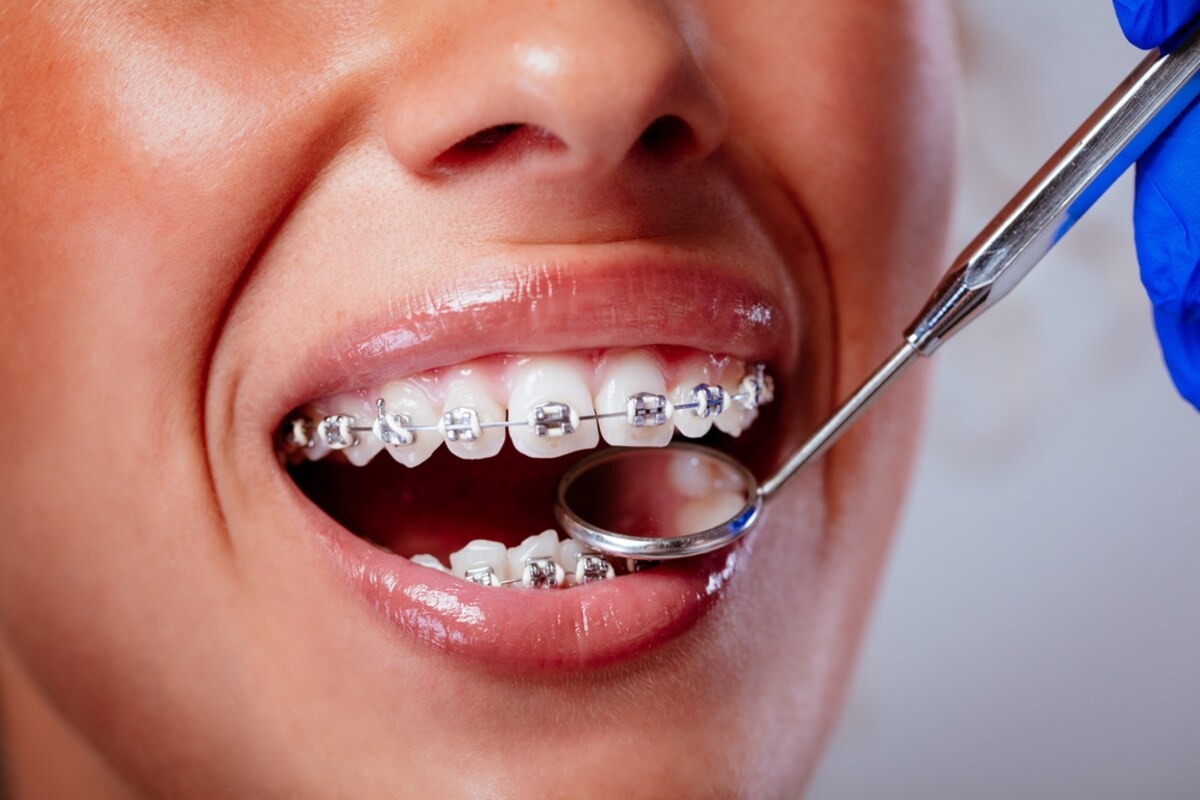
Braces and Invisalign are both orthodontic treatment options, but they differ in how they are worn, maintained and used to move teeth. Braces are fixed to the teeth, while clear aligners are removable. Which option is appropriate depends on the patient’s bite, tooth movement required, oral health, treatment goals and ability to follow the treatment plan.
There is no single option that suits every orthodontic case.
How Do Braces Work?
Traditional braces use brackets and wires attached to the teeth.
The system applies controlled forces that gradually move teeth into planned positions.
Braces may be used for a broad range of orthodontic problems, although the exact appliance and treatment approach depend on the individual case.
Lotus Family Dental offers orthodontic treatment in Peterborough and describes both traditional braces and Invisalign among its orthodontic options.
How Does Invisalign Work?
Invisalign uses a sequence of removable clear aligners.
Patients generally wear the aligners for most of the day and remove them for activities such as eating and oral hygiene. Treatment length and the number of aligners depend on the individual orthodontic problem.
Lotus Family Dental also has a dedicated Invisalign treatment page.
Braces vs Invisalign: Side-by-Side Comparison
| Factor | Braces | Invisalign |
| Visibility | More noticeable | Generally less noticeable |
| Removable | No | Yes |
| Eating | Some food restrictions may apply | Remove aligners for meals |
| Cleaning | Requires cleaning around brackets and wires | Brush/floss teeth before replacing aligners |
| Compliance | Appliance remains attached | Requires consistent wear |
| Suitability | Can address many orthodontic problems | Appropriate for many cases, but not every case |
| Adjustments | Periodic professional adjustments | Periodic progress checks and new aligners |
The American Association of Orthodontists emphasizes that treatment choice depends on the individual orthodontic problem and lifestyle rather than one appliance being universally superior.
Which Option Is Better for Crowded Teeth?
Crowding can be treated using different orthodontic approaches depending on its severity and the underlying bite.
Clear aligners can treat many forms of crowding, but they are not appropriate for every orthodontic situation. Braces may be selected when more complex tooth movement is needed.
An orthodontic assessment is therefore more useful than choosing an appliance based only on appearance.
What About Oral Hygiene?
Both options require consistent oral hygiene.
With braces
Patients need to clean carefully around:
- Brackets
- Wires
- Gumlines
- Spaces between teeth
With Invisalign
Aligners are removable, which allows easier access to teeth while brushing and flossing.
However, teeth should be cleaned before aligners are put back into the mouth. The AAO notes that aligners require consistent wear and appropriate cleaning.
Which Option Is More Convenient?
Convenience depends on the patient.
Braces require the appliance to remain in place, while aligners require the patient to remember to wear and care for them consistently.
Consider:
- Your daily schedule
- Your ability to follow instructions
- Food preferences
- Oral-hygiene habits
- Appearance preferences
- The complexity of tooth movement needed
Can Adults Get Invisalign or Braces?
Yes. Adults can receive orthodontic treatment when their oral health and orthodontic condition make treatment appropriate.
Lotus Family Dental’s orthodontic page states that its orthodontic services are intended for patients of different ages, while its Invisalign page describes Invisalign as an option for adults and younger patients.
However, age alone does not determine which appliance is appropriate.
Questions to Ask Before Choosing
Before beginning orthodontic treatment, ask:
- What problem are we correcting?
- How complex is my bite?
- Which treatment options are appropriate?
- How often will appointments be required?
- What daily responsibilities will I have?
- How will treatment affect eating and oral hygiene?
- What happens after active treatment?
- Will I need retainers?
The AAO recommends starting with an accurate diagnosis and considering treatment goals, lifestyle and the specific orthodontic problem.
FAQs
Is Invisalign better than braces?
Neither option is universally better. The appropriate choice depends on the patient’s orthodontic needs, treatment goals, lifestyle and ability to follow the treatment plan.
Can Invisalign fix crowded teeth?
Clear aligners can treat many cases involving crowded teeth, but suitability depends on the specific bite and tooth movements required.
Are braces more visible than Invisalign?
Generally, yes. Traditional braces use visible brackets and wires, while Invisalign uses clear removable aligners.
Can adults get braces?
Yes. Adults can receive orthodontic treatment when clinically appropriate.
Do braces require different cleaning habits?
Yes. Patients need to clean carefully around brackets and wires to control plaque accumulation.
Do Invisalign aligners need to be worn all day?
Clear aligners generally need to be worn for most of the day according to the treatment plan. The AAO commonly describes approximately 22 hours per day for aligner treatment.
Next Step
If you’re comparing braces and Invisalign in Peterborough, an orthodontic assessment can determine which treatment options are appropriate for your teeth and bite. You can review Lotus Family Dental’s orthodontic services or request an appointment.